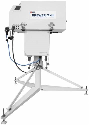
zsf
Differences
This shows you the differences between two versions of the page.
| Next revision | Previous revision | ||
| zsf [2024/01/09 19:25] – created andrew | zsf [2026/02/10 16:36] (current) – andrew | ||
|---|---|---|---|
| Line 9: | Line 9: | ||
| ==== Data Processing ==== | ==== Data Processing ==== | ||
| - | To begin making the new zenith sky coefficients | + | New zenith sky coefficients |
| - | * ds2zs.exe | + | |
| - | * ds2zs.cfg | + | |
| - | * ICF file for the Brewer being analyzed | + | |
| - | * Relevant B-files for the brewer being analyzed | + | |
| - | Open the ds2zs.cfg file in the test directory you created with notepad or another text editor. Edit the file with the following parameters: | + | |
| - | * files: change the b file naming to reflect the brewer being analyzed as displayed above | + | |
| - | * icf: enter the icf file to use in re-processing | + | |
| - | * zsf: refers to one of the following 4 models based on location. Set to &II | + | |
| - | * dtime: maximum time difference between ZS and DS (default 10) | + | |
| - | * min mu: minimum air mass factor for DS/ZS pairs (default 1.2) | + | |
| - | * max mu: maximum air mass factor | + | |
| - | * max std: max DS/ZS ozone standard deviation within | + | |
| - | * 03 height above station (km): ozone layer height above the station (default 22km) | + | |
| - | * Rayleigh height (km): effective air height for Rayleigh calculations (default 5km) | + | |
| - | * Difference between 03ETC and SLR6: the difference between O3ETC and SLR6 at calibration. This number can be found in the brewer’s icf file near the bottom of the text file. Refer to figure 3. | + | |
| - | Save the newly updated cfg file to the test directory and rename it ds2zsxxx.cfg.\\ | + | You will have to merge the .dat files using the merge function under ‘tools’ drop-down menu in the matlab software. Select |
| - | \\ | + | |
| - | Highlight and drag the newly created cfg file and drag it into the ds2zs.exe file.\\ | + | |
| - | \\ | + | |
| - | The ds2zs.exe program will execute its routine and create two files in the test directory. | + | |
| - | * ds2zs.dat: | + | |
| - | * ds2zs.zsf: | + | |
| - | If the program does not run or create the two files above run the program in a command line. To do this type ‘cmd’ into the navigation bar in the ‘Test’ directory you created or navigate with a new command terminal. Once in the correct directory write ‘ds2zsxxx.cfg ds2zs.exe’ and the program will run in your command terminal. From here you can see why the program failed. In cases where it does not provide an explanation it is possible that the program did not create the two new files because there is not enough data for the coefficients.\\ | + | {{ : |
| - | Rename the ds2zs.zsf file to zsfJJJyy.xxx. Once this is done repeat for every brewer you wish to analyze in the respected folder. | ||
| - | ==== Testing ==== | ||
| - | Once a new zsf file is created it is important to make sure that the newly created coefficients and statistics for the ZS processing improves the results for ZS measurements. To do this the old zsf file and new zsf file must be compared in BFilePro or another data processing software. For this example we will be using BFilePro and Brewer #039.\\ | ||
| + | Select which instrument you wish to calibrate and then select the appropriate region that the instrument operates in to use the correct albedo for creating the new coefficients. | ||
| + | |||
| + | {{ : | ||
| + | |||
| + | You then select the calculation parameters. Most of the preset options are standard and what you will use to create the new ZSF file, you will need to select the correct date range. Use a date that starts close to the most recent calibration to insure the most accurate DS data is used to create the new coefficients. | ||
| + | |||
| + | {{ : | ||
| + | |||
| + | Select 'Run ZSF fitting' | ||
| + | |||
| + | {{ : | ||
| + | |||
| + | If the new ZSF improve the agreement between ZS and DS data by ~5% apply the new calibration to the instrument. | ||
zsf.1704828339.txt.gz · Last modified: by andrew